Tuesday, 15 November 2011

Working Hard..or Hardly Working?

Well half of us have just had our week 7 review and the other half are probably really not looking forward to theirs. The stark realisation that we just aren't working hard enough is the result of our assessments.

So the question I ask myself is am I working hard, or hardly working?
Up till now I thought I was working hard, but it clearly isn't enough. I'm doing OK in 3D but not so much in Visual Design and Critical studies so I want to take this opportunity to review myself and self-assess why that is.

3D
I've enjoyed 3D right from the first day and we made our Church, I found 3ds Max a new and interesting challenge with endless possibilities. I was daunted by the Dalek project but threw myself into it and felt I did a good job and learnt alot along the way. Our first project with texturing, the wheelie bin, also went well. I made 2 bin models as I wasn't happy with the first and spend several hours unwrapping trying to find different more affective ways of doing...stubbornly refusing to watch tutorials ¬.¬ I found making the textures relatively easy once I had the UV mapped out and was pleased with the overall outcome.
My Finished Wheelie Bin
 For the future - I need to be more careful with naming assets as its a basic procedure that is required for importing assets into a game engine, and something I should ingrain into myself at this early stage. I also need to accept my status as a n00b and just watch some damn tutorials! Despite the bin going well future projects are going to be more complex and I need to make sure I can unwrap a UV efficiently or I know I'm going to struggle down the line.

Visual Design
Despite not passing visual design in the assessment I feel I've personally made some improvements since I started. Visual Design is easily my weakest subject area and I don't have as much experience in it as I'd like. I've got quite frustrated by drawing over the last 6 weeks but think my approach and drawing technique has already changed. I'm pleased we haven't been using lots of different mediums and colours yet because I've enjoyed the opportunity to progress with pencil, a good foundation for later progression.
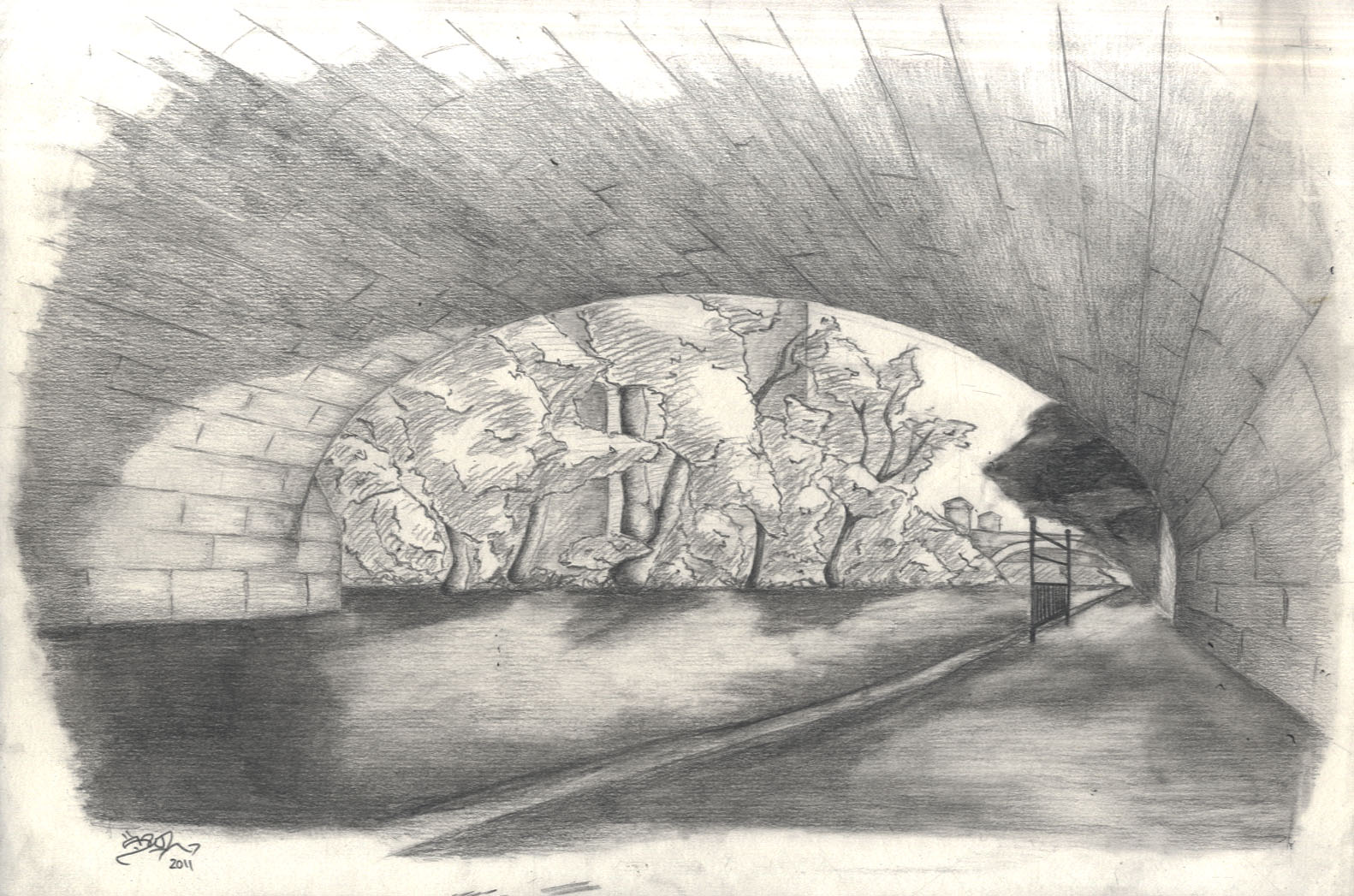
First week final

I think the problem I've had is time. It takes time and effort to improve and despite feeling I have put alot of time into my drawing so far but it just isn't enough. I can say 'I've been out drawing all day' but actual time spent with pencil to paper is less than I realise. I probably could say "I've done the 76 hours required" *smug face* but its not true. I've been outside all day several times with the good intention of spending it drawing, but then not really drawing for most of it, and that's just wasted time.


 Anyway 12 hours, 12 thumbnails and 1 final a week is minimum....who ever gets where they want to in life by doing the bare minimum. I'm not here to just about scrape by, I'm here to learn, improve and get where I want to be. Doing the minimum isn't going to be enough, so I'm going to have to increase those numbers to personal goals and then stick to them. So far I havent been dedicated enough to my work...the release of several big title games recently really hasnt helped...but playing games isnt going to make me better at making them. So I'm going to have to release Ive entered a new stage in my life, I can't just sit around and play games doing the minimum and expected to get by and magicily improve. If I ever want to be in the industry I have to manage myself better and accept that work needs to become what I do first thing in the morning and last thing at night...hopefully with an hour or two of games in there somewhere.

Critical Studies

Critical Studies and blog writing is something I thought I'd do OK in. I don't find writing a particularly difficult thing to do and when in the right mood quite enjoy it. But I was foiled again by thinking the bare minimum was ever going to be good enough. I play games, I watch films and then like most people I discuss it with other people, we review it with each other, comparing and analysing.
I just need to be writing it down and posting it up! I'm doing it everyday anyway but writing about it and posting is showing the active interest I have.
I don't have an excuse not to, I don't find it hard and it doesn't take too long.
So I just need to remember to do it...oh and add pictures heh...not everyone likes big blocks of writing.

Wednesday, 9 November 2011

A history of computer games, part three: 2000s

Halo from Bungie and Microsoft
And so we reach the 2000s and the sixth and seventh generation of video game consoles. The first release of the generation was the Dreamcast which had limited success and was quickly superseded by the hugely anticipated Playstation 2. Nintendo followed a year later with the GameCube, their first disc based console. While the GameCube did well it was hindered by its lack of third-part games and reputation for being a 'kids console' lacking the mature games the market wanted. 2002 saw the release of the Xbox and Microsoft's entry into the console market. In order to get a hold on the market Microsoft sold the console at a loss and concentrated drawing profit from game development and publishing. Shortly after it's release Halo was launched on the Xbox, instantly becoming its driving point and later becoming one of the most successful console shooter series's of all time.

Throughout the early 2000s console gaming largely continued the established trend towards increasingly complex and adult orientated game play. Most of the successful games of the time were aimed towards more mature players, including many now classic gaming franchises like Halo and Resident Evil. Even Nintendo, which had mainly been aimed at a younger audience, began publishing more mature games, with Capcom's Resident Evil 4 being a good example.


Other noteworthy changes in the industry during the early 2000s was the rise of online and mobile gaming. As affordable broadband spread many game publishers turned to online gaming as a way of advancing. Massively Multiplayer Online Role-Playing Games (MMORPGs) featured mainly on the PC and included hugely successful games such as; World of Warcraft (which I've spent far to many hours of my life on ¬.¬), Everquest and Ultima Online. Every console since the Dreamcast has had the ability to support an Internet connection or has had the option available as an add-on. Microsoft's Xbox also had its own online gaming service called Xbox Live which has been and still is a huge success today. With huge advancements in Mobile phone technology, mobile gaming had been able to develop quickly and has a massive market with game apps making up more than half of sales through Apple's app store!


Mobile Gaming on the Iphone

And now we reach the big 3....The consoles most of us will own, play and love and the moment right now, the PS3, 360 and Wii.
The console war

Microsoft were first to enter the shinny new seventh generation of consoles with the Xbox 360 in 2005. Sony followed in 2007 with their black monster, the Playstation 3! The launch of the consoles brought a whole new standard of technology and stunning graphics. Both consoles featured high definition graphics, large hard disc storage, integrated networking and an online gameplay and sales platform. At launch the new consoles were the first of their kind to challenge PCs in power, but for a significantly lower price tag.
Nintendo released their next console, the Wii, shortly after the PS3 and it put Nintendo back into the console race. While the Wii had a lower technical spec than its competitors it was cheaper and was based around a new and novel gaming experience using motion control to play. Many gamers, publishers, and analysts initially dismissed the Wii as an underpowered curiosity, but were surprised as the console sold out through the 2006 Christmas season, and remained so through the next 18 months, becoming the fastest selling game console in most of the world's gaming markets.

Wii's take on motion control gaming, at first shunned by many gamers, suddenly changed the way we interact with games and was later picked up by both Microsoft and Sony who later made Kinect and Playstation Move. This forever impacted the way games can be played and allows players to become much more involved with games., leading to a rise in sports/fitness games.
With technology standards rising the quality of games went with it and expectations for visuals within games rocketed. Our games were becoming increasingly complicated and visually stunning but all this meant development costs for developers increased massively.  While many game studios saw their Xbox 360 projects pay off, the unexpected weakness of PS3 sales resulted in heavy losses for some developers, and many publishers broke previously arranged PS3 exclusivity arrangements or cancelled PS3 game projects entirely in order to cut losses. Game development on a seventh generation console needs a budget of around $10 million or more and it was estimated in 2005 that around only 80 games a year make a profit.

What does this mean? Huge losses for companies in the gaming industry. Even big companies like Sony and THQ are losing money by the bucket load because it just costs too much to develop games and too many don't do as well as they should. This isn't great news for us budding game artists, the companies we might one day hope to work for and steadily going down the drain, unless something changes. The industry has reached somewhat of a stalemate. It has constantly been changing and improving for decades, but it has reached a point where it can't afford to go any further and is on the cusp of becoming completely unsustainable. Improvement is no longer on the menu,so what is?
Despite hardships most companies are still in the mood for hiring people,thankfully, and maybe, just maybe the gaming industry will still be here in a few years when we're all going to be looking for a job in it.
Companies are going to want the best of us, because they won't be able to afford just anyone.
They won't employ just anyone.
I won't become just anyone.
The industry and games really excite me and I'm going to make sure that if its hiring when I finish my degree I'm going to get my place in it.

Thursday, 27 October 2011

Games of the 1990s


In my last blog I looked at the general advancement of our gaming technology and how our changing attitude and interest towards games drived this progression forward. The way in which our technology and its capabilities improve impacts what types of games we can play an even how we can play them eg. how the creation of the wii and xbox kinect has changed the way we play games massively.

During the 1990s our consoles began to improve hugely and
the video games available also took some significant steps

forward. The years 1987 - 1996 housed the fourth generation consoles, a time when 2D graphics improved from previous consoles and experimentation with 3D graphics started to occur. The Sega Megadrive was released in the late 1980s (1988) and brought with it such games as; Altered Beast, Streets of Rage and Road Rash. The SNES and the Neo Geo weren't far behind and were released in 1990.

From this point on consoles had become capable of supporting more advanced and complicated games and many of us will of started our interest in games somewhere around this time. Filling the cap before the next big console release was a steady flow of good video games. This included; Sonic the Hedgehog, Street Fighter II, Super Mario World, Mortal Kombat, Mario Kart, Air Combat, Ridge Racer, Star Fox, Virtua Fighter, Killer Instinct and Earthworm Jim.

 
From 1993 - 2002 was the fifth generation consoles, the 32/64 bit era and the time when video games began to evolve into the 3rd dimension. The Playstation 1 and Sega Saturn were launced in 1995 and the N64 followed shortly after in 1996. With the introduction of these consoles the CD (or Compact Disc) started to replace and bring about the decline and end of cartridge games. Due to load times of CDs the N64 remained loyal to the cartridge but became one of the last mass produced consoles to use them.


As before the release of better more powerfull consoles lead to a stream of more advanced games. These included; Time Crisis, Resident Evil, Crash Bandicoot, Golden Eye 007, Final Fantasy 7, Odd World, Grand Theft Auto, Grand Turismo. Rainbow Six and Metal Gear Solid.  Handheld gaming also took a step forward during this time with Nintendo's release of the Gameboy Colour.

Right at the end of the 1990s the sixth generation of consoles was kicked off by Sega's launch of the Dreamcast in 1999. The dreamcast introduced several innovations including internet gaming and it was really the pioneer for online gaming. The dreamcast had a large libray of games counted as 688 offical games with many unoffical releases, this included; ChuChu Rocket!, Crazy Taxi, Eco the Dolphin, Fur Fighters, Marvel VS Capcom 2, Shenmue and Sonic Adventure 1 and 2. Despite its early success the Dreamcast was prematurely discontinued due to the release of the PS2 in 2000.

The 2000s brought about huge changes in video games and consoles with big advancements in games and the launch of the PS2, Xbox, Gamecube, Xbox 360, PS3, Wii and several handhelds all within the same decade. I will be looking at the 2000s and what it brought in the next blog.....yay for next gen! 

Wednesday, 19 October 2011

A history of computer games, part two: 1980s - 1990s


Arcade machines
I'll start this blog with a little about the 'Golden Age of Video Arcade Games'.
The arcade game industry entered its golden age in 1978 with the release of Space Invaders by Taito, a success that inspired many other manufacturers to enter the market. Arcade machines became more mainstream  and could be found in places such as shopping malls, storefronts, restaurants and convenience stores. The total sales of arcade machines increased significantly during this period and the arcade game industry would continue to generate a large revenue through to 1985.


I think this growing interest in video games only expanded through the 1980s and 1990s and fuelled the industry, driving forward the move from arcade machines to home consoles/computers. Following the success of the Apple II and Commodore PET in the late 1970s a series of cheaper rivals emerged in the early 1980s. During the 1980s many more home consoles were released including, the Commodore Vic 20 and 64; Sinclair ZX80, ZX81 and ZX Spectrum; and Atari 8-bit family, BBC Micro, Acorn Electron, Amstrad CPC, and MSX series. These rivals helped to drive the  both the home computer and games markets forward.
At the end of 1983, the industry experienced the "crash" of the video game industry, as well as the bankruptcy of several companies that produced home consoles. It brought an end to what is considered to be the second generation of console video gaming. Causes of the crash include the production of poorly designed games such as Custer's Revenge, E.T. the Extra-Terrestrial, and Pac-Man for the Atari 2600.

The years 1983 - 1995 gave birth to the 'third generation consoles' which included the launch of the NES (Nintendo Entertainment System) which was bundled with  Super Mario Bros. and became an instant success. The gamepad or joypad, took over joysticks, paddles, and keypads as the default game controller included with the system. The 8 directional-pad (or D-pad) became the standard and is still used in todays controllers.

Nintendo's NES
Nintendo's GameBoy


Video gaming started to really advance graphicly in the 1990s and it was a decade of innovation. Graphics moved from raster graphics to 3D and several genres of video games were born, including; first person shooters, real time stratedy and MMOs. Handheld gaming also began to become popular due to releases of handheld consoles like the Game Boy in 1989.
The 1990s was also the time when the gaming industry matured into a more mainsteam form of entertainment. More publishers, higher budgets and larger production teams working with the music and film industry were major developments in the 1990s and lead to an improvement in games.
The increasing computing power and decreasing cost of processors caused the rise of 3D graphics, as well as multimedia capabilities through sound cards and CD-ROMs.


I think the 1880s and 1990s were the time of great shift in the video game industry in several different ways. Games began to be more mainstream through the advancement and popularity of arcade machines, which in turn lead to the increase of home video game consoles. The huge success of home consoles fuelled the industry and in a relatively short space of time experianced big improvements in graphics and afforability. The shift from gaming on public arcade machines to home systems was a very important part in video game history.

Monday, 17 October 2011

A history of computer games, part one: 1950s - 1970s

I'm one of those people who thought computer games began with pong way back in the 1970s. So I was shocked to find there was a lot more going on even before that. Most of us were born around the late 1980's or 1990's and were born into a world were PCs (although dated now) were current and easy to come by. The first computers and games seems long ago and we've developed and improved so quickly its surprising how advanced games are now compared to their beginnings.
And their beginnings is what I'm going to try comprehend....

Computers themselves began life as the 'Difference Engine' created by Charles Babbage and its almost impossible to believe the desktops we have today ultimately come from this. Computers and their technology have a history and development line and while this is important (we wouldn't have games without the machines they run on) I think it would be too much to try focus on computers, their history/ development as well as games within the same blog!

I think computer games started when William Higinbotham created the first video game ever in 1958. His game, called "Tennis for Two," was created and played on a Brookhaven National Laboratory oscilloscope.
Spacewar! developed in 1962 was the next computer game to be created and is generally assumed to be the first real computer game. The operating system used was the first to allow multiple users to share the computer simultaneously. This was perfect for playing Spacewar, which was a two-player game involving warring spaceships firing photon torpedoes.
In 1967, Ralph Baer wrote the first video game played on a television set, a game called Chase.
In 1971, Nolan Bushnell together with Ted Dabney, created the first arcade game. It was called Computer Space, based on Steve Russell's earlier game of Spacewar!.

And then 11 years after Spacewar! was introduced the first commercially available video game, Pong was released in 1972. Pong quickly became a success and helped paved the way for the start of the video game industry. Soon after its release, several companies began producing games that copied Pong's game play, and eventually released new types of games. And thus video games and their industry began.


I think computer systems and games have evolved and advanced massively over the recent years and our continued development is only making them better. New hardware is constantly being invented meaning games can develop and advance with them. Looking back at its early begins its hard to believe how far everything has come in a relatively short space of time and how far it has yet to go is an exciting prospect to be part of!


Bring on the future.


Saturday, 8 October 2011

Hi My Name Is....

My name is Sarah Hesketh and I'm currently a Game art student at the DMU.
I only really got into Art & Design 2 years ago when I did a drawing short course and a bit of life drawing. I'd always enjoyed art but not even thought of pursuing it until this point. My life has always revolved around games from a very young age and once finding the Game art course at the DMU set my sights on getting here and combining my interests.

I did a BTEC 1st in Art & Design at Derby college and then the Foundation here at the DMU. The last two years have been somewhat of a struggle as I didn't enjoy or have much interest in what those courses were about but the end result of being where I am now is what drove me through it.

I'm not a person to do things by half and when I do something I really throw myself into it, I'm hoping that is going to help me keep on top of this course and keep me constantly learning and improving at what I do.
I don't honestly know right now what I want to do in the future, or where I want to be or who I want to be.
I didn't even know I wanted to do game art until a few years ago. I'd love to be working in the game industry in the next few years but I don't know doing what yet...I admire game art but personally find 3D modelling more enjoyable..so who knows what I'll do.

My goal at the moment is doing well on the course. I aim to constantly push myself to improve and never settle with something when I know I can do better. I want to try my best at everything offered on the course and see what comes out on top and I'll go from there.

Hopefully I'll be here this time next year and I'll get to read all the new 1st years 'Hi my name is.." blogs.
We shall see...